

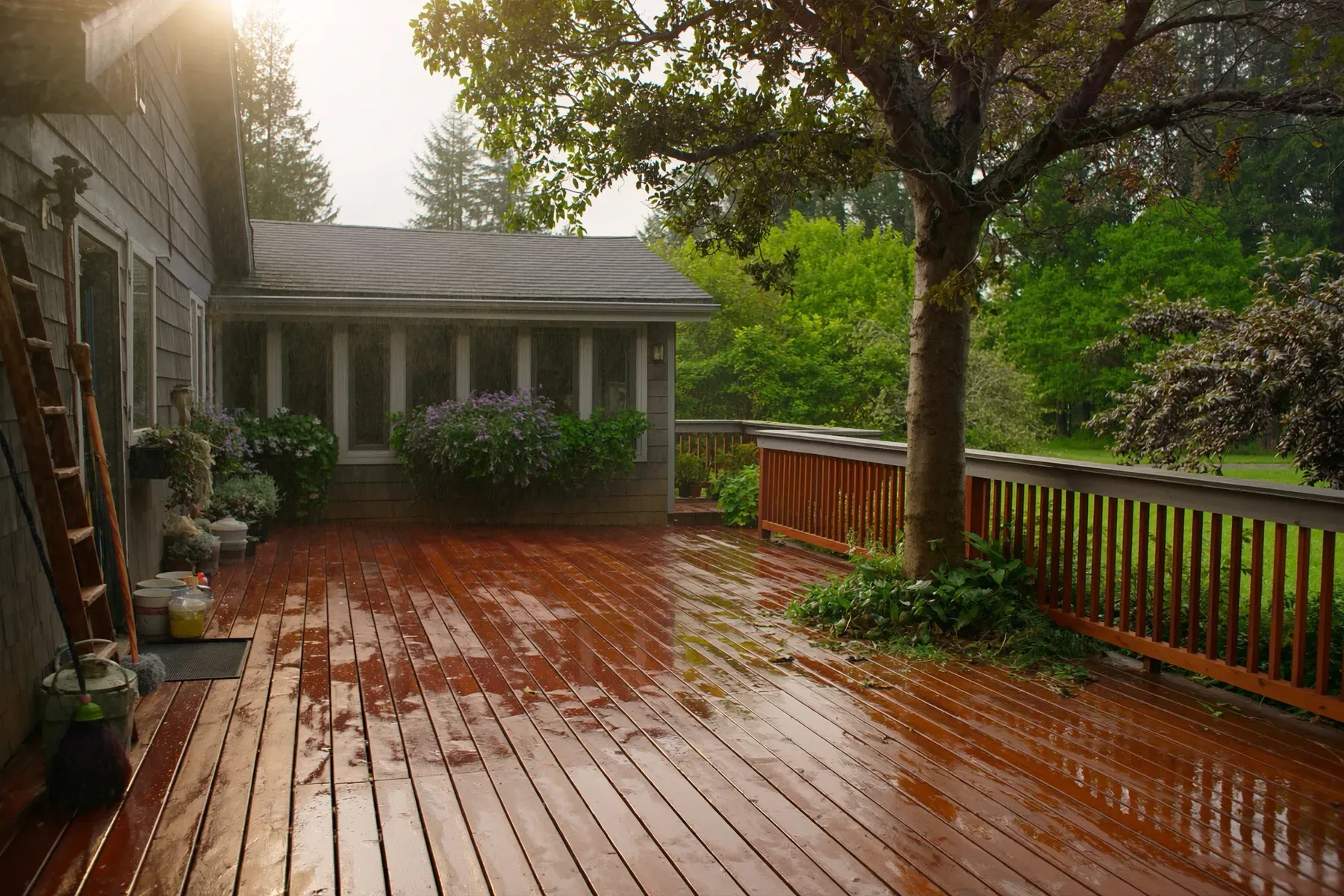
After a New England winter, check your deck for structural problems first, then clean, repair and protect it. Start with the connection to the house, the posts, the framing and the railings, because those hold the weight. Cosmetic work like cleaning and sealing comes second.
Freeze-thaw cycles, standing snow, road salt tracked from boots and months of moisture all stress a deck. A spring inspection catches small issues before they become repairs.
Start with a safety inspection
Walk the deck and look for anything that moves, sags or looks wrong. Do this when the wood is dry so you can see cracks and rot clearly.
Ledger and connection to the house
The ledger is the board that attaches the deck to the house, and a failed ledger is a leading cause of deck collapses. Check for rot, rust, gaps or flashing that has pulled away. Look for water stains on the house wall near the connection. If you see damage, stop using the deck and call a qualified professional.
Posts, beams and joists
Probe wood with a screwdriver, especially near the ground and where members join. Soft or crumbly wood indicates rot. Look at post bases for moisture and decay, and check that posts sit on solid footings that have not heaved.
Fasteners and hardware
Look for corroded or loose screws, nails, joist hangers and brackets. Frost movement can back out nails. Replace damaged hardware with fasteners rated for outdoor use and compatible with pressure-treated lumber.
Railings and stairs
Shake the railings. They should not wobble. Check stair stringers, treads and handrails, and confirm that baluster spacing is consistent. Railings and stairs must meet local building code, so ask your building department what applies.
Repair before you clean
- Replace cracked, split or rotted boards.
- Re-secure loose boards and tighten hardware.
- Sand splinters and raised edges.
- Repair or replace damaged railings and stair parts.
- Address any ground contact or drainage problem under the deck.
Structural repairs may require permits. If your deck is old, an inspection by a professional is a good idea. Our decks and carpentry service handles repair and rebuilding.
Clean the deck
Wood decks
Sweep debris from the gaps between boards, since trapped leaves hold moisture. Wash with a deck cleaner and a soft-bristle brush. Use a pressure washer on low pressure only, keeping the nozzle moving and well back, because high pressure can gouge wood and raise the grain. Rinse thoroughly and let the deck dry fully, often two or three days of dry weather, before sealing.
Composite and PVC decks
Clean with soap and water and a soft brush, following the manufacturer’s instructions. Remove mildew and organic stains early. Avoid harsh solvents and abrasive tools unless the manufacturer approves them.
Seal or stain wood
Water should bead on a protected deck. To test, sprinkle water on the boards. If it soaks in, it is time to refinish. Choose a quality exterior stain or sealer and apply it in dry weather with moderate temperatures, following label directions. Apply thin, even coats, and do not let product pool. Pay attention to end grain and board edges, where water enters. Plan to reapply on a schedule that suits the product and your exposure.
Protect the area around the deck
- Keep plants trimmed back so air circulates.
- Clear soil, mulch and leaves away from posts and framing.
- Check grading so water runs away from the deck.
- Keep planters off the surface, or use saucers that do not trap water.
- Use sand or a deck-safe product instead of rock salt on the surface in winter.
Trees overhead drop debris and shade the surface, which promotes algae. Read our spring cleanup checklist for broader seasonal tasks, and see our grounds and garden care service for upkeep around the structure.
Signs it is time to repair or rebuild
Consider a larger project if you see widespread rot, a sagging or bouncy surface, extensive fastener corrosion, or a ledger or footing problem. Sometimes the best option is replacing the surface boards while keeping sound framing, and sometimes it is a full rebuild.
Frequently asked questions
How often should I seal my deck?
It depends on the product, sun and weather exposure. Test with water each spring, and reseal when water stops beading.
Is it safe to use my deck if boards look gray?
Gray color is cosmetic weathering, not a sign of failure. Check strength by probing for softness and inspecting framing.
Can I power wash a deck?
Yes, with care. Use low pressure and a wide fan tip, and keep the nozzle moving to avoid damaging the wood.
For help with inspection, repair or rebuilding, you can request a consultation.