

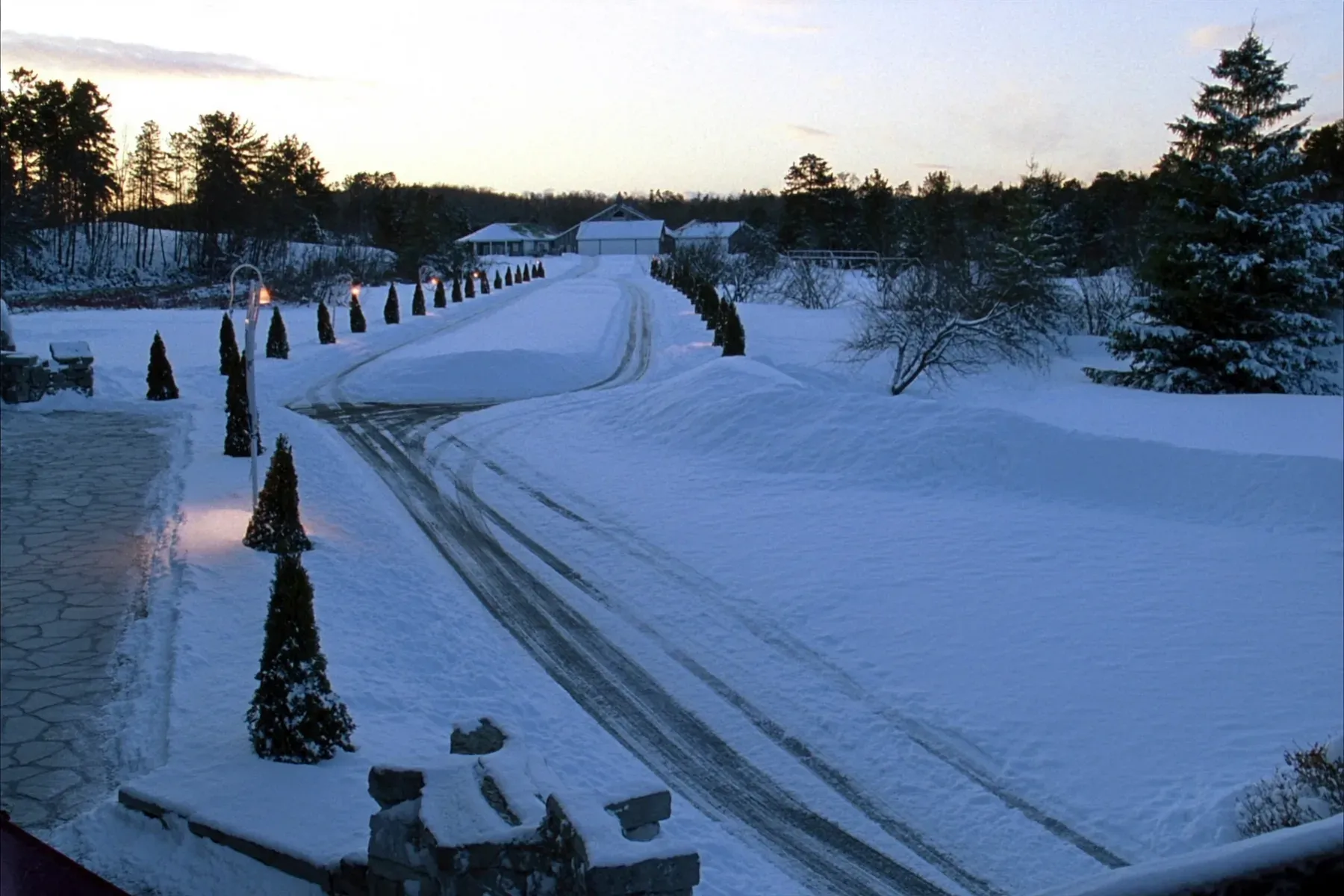
A good snow removal plan answers four questions before the first storm: what gets cleared, in what order, with what materials, and by whom. Decide these in October, mark your property, and confirm who is responsible, and winter will cost you far less stress.
This guide walks you through building a plan for a home, a large estate or a multi-property portfolio.
Start with a site walk
Walk the property and list everything snow touches: driveways, parking areas, walkways, steps, entries, ramps, mailboxes, hydrants, and access to utility meters and generators. Note slopes, shaded areas that stay icy and places where meltwater drains across paved surfaces and refreezes.
Photograph the property now, in good condition. Existing damage, such as cracked pavement or loose pavers, is much easier to document in October than in March.
Set priorities and a clearing order
Decide which areas must be clear first. A typical order:
- Emergency and delivery access, and primary driveway
- Main walkways and entrances
- Secondary parking and paths
- Service areas, side doors and garages
- Low-priority or decorative areas
For a commercial property, HOA or multi-building site, write this down so crews and managers share the same expectations.
Decide your trigger depth
Agree on when plowing begins. Many contracts use a snowfall depth trigger, such as two inches, while some properties need clearing at any accumulation. Spell out whether service is also on call during an ongoing storm, after it ends, or both.
Mark your property before the ground freezes
Plow crews cannot see what is under snow. Mark the edges of driveways and walkways with reflective stakes. Mark curbs, drains, lawn edges and low walls. Flag raised obstacles, such as sprinkler heads, boulders and landscape lights, that could be struck. Our fall cleanup guide includes marking as part of the seasonal shutdown.
Choose your ice management approach
Salt is effective but can damage concrete, stone, metal and plants, and runoff affects nearby soil and water. Consider:
- Sand or grit for traction (does not melt ice)
- Rock salt (sodium chloride) for general use, only as needed
- Calcium or magnesium products that work at lower temperatures but cost more
- Pre-treating surfaces before a storm, which can reduce bonding of ice
Use the minimum needed. Over-application wastes money and harms surfaces. Some natural stone and newly poured concrete are especially sensitive to de-icers. If you have installed pavers or stone, check manufacturer guidance, and see bluestone, pavers or natural stone for a patio for related material considerations.
Plan where the snow goes
Piles need somewhere to land. Pick storage areas that will not block sight lines at driveway ends, bury hydrants, smother plantings, or melt back across walkways. Avoid piling on young trees and shrubs, and keep snow off septic components and drainage structures. On properties with tight space, plan to haul or push snow in advance.
Protect hardscape, plants and turf
Plows and blowers can chip edges, scrape pavers and tear turf. Raise plow shoes on paver or stone surfaces, mark edges, and consider installing guards or stakes on vulnerable plantings. Salt spray at road edges can burn evergreens and lawns; screening and plant choice help. Our hardscape and masonry service can repair surfaces that winter has damaged.
Decide who handles it
Options include doing it yourself, hiring a plow contractor, or including snow in a broader property contract. Compare:
- Response and priority terms
- Equipment sizes for your access points
- Insurance coverage and documentation
- How storms, ice and re-treatment are billed
- Communication during events
Insurance matters. Ask for proof of coverage, and clarify whose responsibility it is if someone slips on an untreated area. Our seasonal cleanup and snow services are one way to cover this, and full estate management can fold winter work into a single contract.
Frequently asked questions
When should I arrange snow service?
Before the first storm, ideally in early fall. Many providers set routes and capacity before winter begins.
How can I reduce salt damage?
Shovel early so less ice bonds to the surface, apply only what you need, and choose products suited to your pavement and plants.
Who is responsible for clearing sidewalks?
Local ordinances vary by town. Check with your municipality, and note that rules may also apply to commercial and rental properties.
To set up a plan for your property, you can request a consultation.