

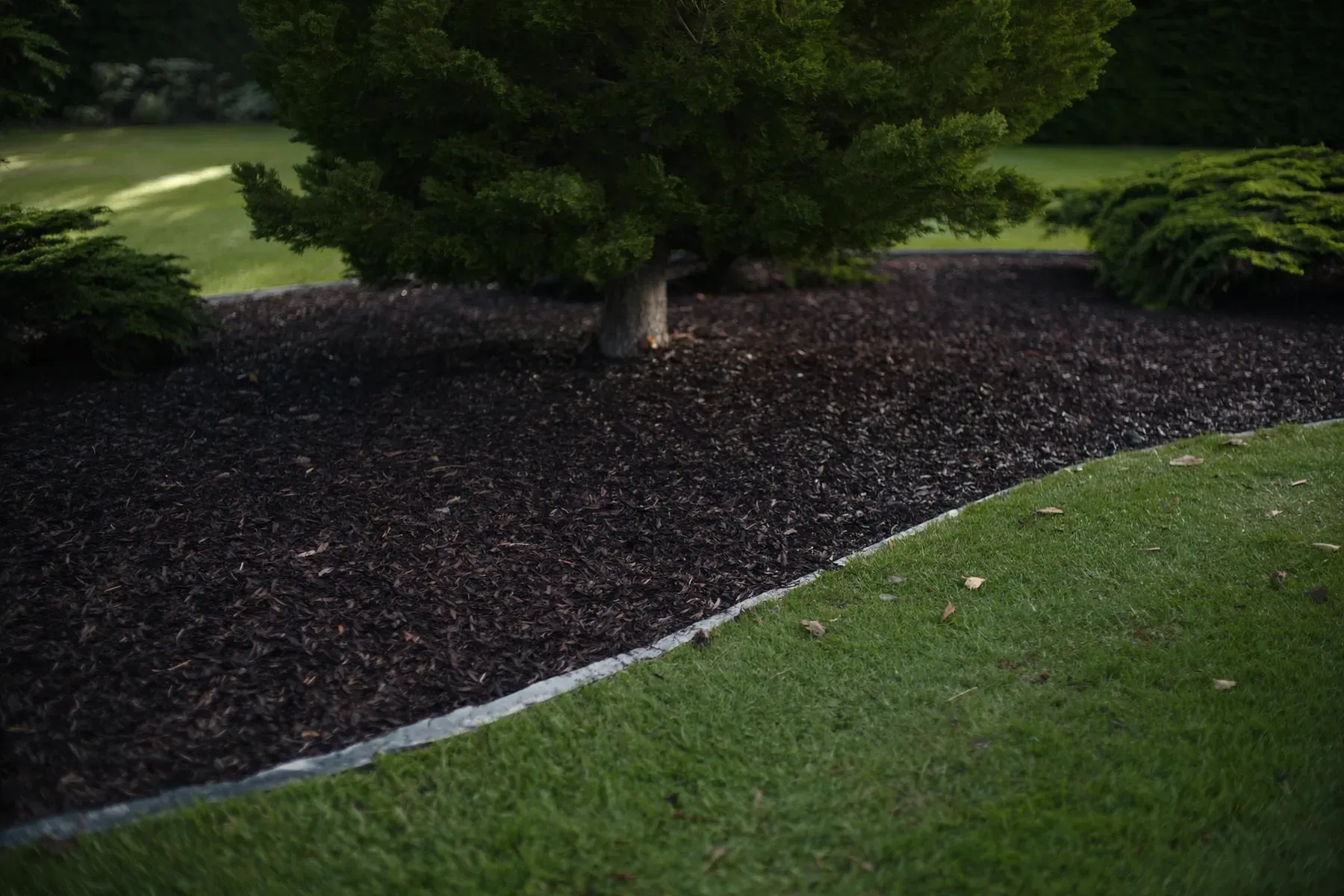
The most common mulch mistake is piling it against the trunk in a cone, often called volcano mulching. Mulch should be two to three inches deep, spread wide, and pulled back from the trunk so the root flare stays visible. Mulch done correctly protects roots; done poorly, it can slowly harm or kill a tree.
Here are the mistakes to avoid and how to correct each one.
What mulch is supposed to do
Mulch moderates soil temperature, holds moisture, suppresses weeds and reduces mower and trimmer damage near trunks. As organic mulch breaks down, it also feeds the soil. Those benefits only appear when mulch is applied in a thin, wide layer. Too much, too close, and it works against the plant.
Mistake 1: Volcano mulching
Heaping mulch several inches up the trunk traps moisture against bark. Bark that stays wet can rot, invite insects and disease, and develop weak spots. Mounded mulch can also encourage stem-girdling roots, which circle the trunk and slowly strangle it.
The fix: shape mulch like a donut, not a volcano. Leave a few inches of bare ground around the trunk so the base can dry.
Mistake 2: Burying the trunk flare
The trunk flare is the place where the trunk widens as it meets the roots. It should be visible at the soil line. If a tree looks like a pole stuck straight into the ground, it may have been planted too deep or buried by years of added mulch and soil.
The fix: gently pull mulch back until you can see the flare. If soil covers it, an arborist can use air tools to expose the root collar without damaging roots. Our guide to signs a tree needs an arborist lists other warning signs.
Mistake 3: Mulching too deep
More is not better. A layer deeper than about three inches can block oxygen, hold excess moisture and encourage shallow roots. Piling fresh mulch on top of last year’s without checking what is underneath is how beds get four, six or even eight inches deep.
The fix: measure. Rake or remove old mulch until the total is two to three inches. Fluff compacted layers instead of adding new ones.
Mistake 4: Mulching too narrow
A small ring around a large tree leaves most of the root zone exposed to mowers, compaction and competing turf. Tree roots extend well past the canopy edge.
The fix: extend the mulched area as far as practical, ideally to the drip line for young trees. A wider bed also means less mowing and trimming near the trunk, which is a leading cause of bark injury.
Mistake 5: Using the wrong material
Fresh wood chips, shredded hardwood, pine bark and aged leaf mulch work well. Avoid dyed products of unknown origin, heavy layers of fresh grass clippings that mat down, and rock mulch around plants that prefer cool roots. Landscape fabric under mulch often causes problems over time, because roots and weeds grow into it and it blocks organic matter from reaching the soil.
Mistake 6: Mulching at the wrong time or over wet soil
Applying mulch over frozen ground can trap cold and delay spring warm-up. Piling it on saturated soil keeps oxygen from roots. Mulch is best applied in spring after the soil warms and in fall after cleanup. Pull it back slightly from stems of perennials in winter to reduce rodent shelter.
A simple mulching routine
- Clear weeds and loosen compacted mulch.
- Locate the trunk flare and pull mulch back from it.
- Check depth with a ruler and remove excess.
- Spread new mulch in an even two-to-three-inch layer.
- Leave a gap of several inches around each trunk and stem.
- Water if the soil is dry.
Shrubs and perennial beds
Shrubs follow the same rule: keep mulch off the stems and keep depth modest. In perennial beds, use a thinner layer of one to two inches so crowns can breathe and self-seeders can emerge. Our grounds and garden care service includes bed maintenance, and our landscape design service can help plan bed sizes that make mulching easier. Seasonal timing is covered in our spring cleanup checklist.
Frequently asked questions
How much mulch should I put around a tree?
Two to three inches deep, spread wide, with a few inches of clearance around the trunk.
Is it okay to add new mulch every year?
You can refresh it, but first check how much is already there. Often only a light top-up or a rake to fluff the old layer is needed.
Can volcano mulching kill a tree?
It can contribute to decline over time through rot, pests and girdling roots, especially in young or stressed trees. Correcting it early prevents most damage.
If you are unsure what your trees and beds need, you can request a consultation.