

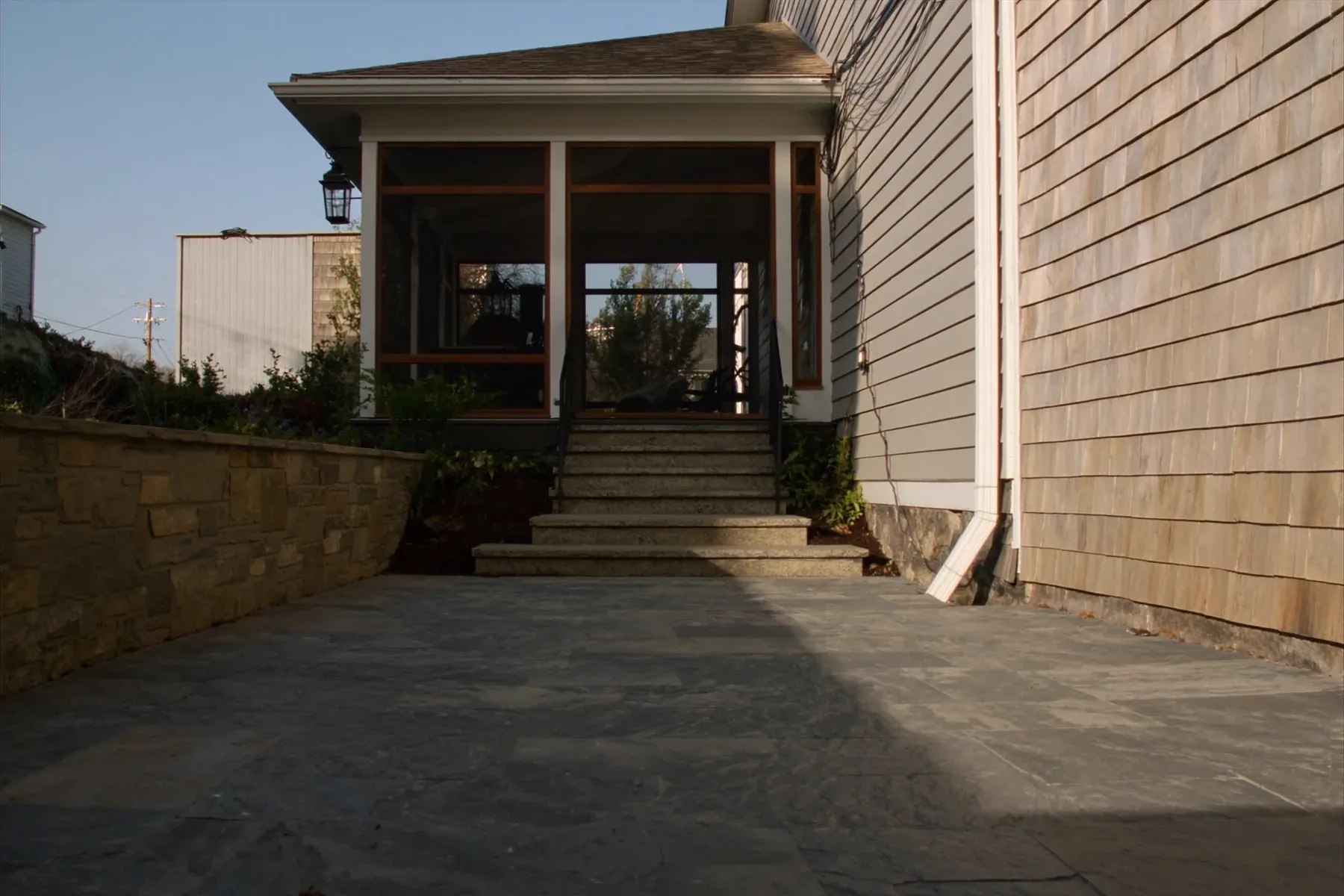
For a New England patio, the material matters less than the base beneath it. Bluestone, concrete pavers and other natural stone can all handle freeze-thaw winters when laid over a properly compacted, well-drained base. Choose by look, budget and maintenance, then insist on good installation.
Here is how the main options compare and what to ask before you commit.
Why freeze-thaw changes everything
Water gets into soil and joints, freezes, expands and pushes surfaces upward. When it thaws, the surface settles unevenly. A patio built with a thin or poorly drained base will heave, crack or sink within a few winters, whatever the material. In Massachusetts, frost can reach well below the surface, and salt and de-icing products add wear.
Three things reduce the damage: a deep, compacted aggregate base, good drainage so water leaves the area, and stone or pavers with low water absorption.
Bluestone patios
Bluestone is a dense sandstone with a cool blue-gray tone, widely used across the Northeast. It comes as irregular pieces for a natural look or as cut rectangles for a formal pattern.
Pros: durable, slip-resistant when thermal or natural cleft surfaces are chosen, and traditional in New England settings.
Cons: can be pricey, may stain if left unsealed, and darker colors can get hot in full summer sun. Large slabs laid on a weak base can crack.
Bluestone can be set in a dry-laid method on compacted stone dust, or mortared over a concrete slab. Dry-laid systems tolerate movement better and can be repaired by lifting and resetting individual stones.
Concrete and clay pavers
Interlocking pavers are small units locked together with joint sand and a perimeter edge restraint. They come in many colors, textures and patterns.
Pros: flexible system that tolerates frost movement, simple to repair by lifting and relaying, and consistent size and color.
Cons: joints need occasional re-sanding, weeds and ants can find joints if neglected, and edge restraints must be installed correctly or the whole field can drift.
Polymeric sand and sealing can help control weeds and joint loss, though sealer needs periodic reapplication.
Other natural stone: flagstone, granite and more
Flagstone offers varied color and shape for a relaxed, organic feel. Granite is extremely hard-wearing and suits steps, edging and borders. Limestone and some sandstones can look elegant but are more porous, so check how a specific stone performs with freeze-thaw and salt before using it as a walking surface.
Ask suppliers for the stone’s water absorption and local track record. Low absorption is a good sign for cold climates.
Side-by-side considerations
- Look: Bluestone and flagstone read as natural; pavers read as designed and tidy.
- Repairability: Pavers and dry-laid stone are easiest to reset.
- Maintenance: Sweep, rinse, re-sand joints if needed and reseal on a schedule.
- Slip resistance: Choose textured finishes for wet or shaded areas.
- Heat: Lighter colors stay cooler.
- Budget: Material cost is only part of it. Excavation, base depth, edging and drainage drive the total.
What to ask about the installation
- How deep will the base be, and what material is it?
- How will it be compacted, and in what layers?
- How will water drain away from the patio and the house?
- What edge restraint will hold the perimeter?
- How will it connect to steps, walls and existing paving?
- How will you handle plantings, lighting or a future fire feature?
A patio that fits into the landscape also needs planning. Our landscape design service can integrate layout, grading and planting, and our hardscape and masonry service covers the construction itself. Surrounding trees matter too, since roots can lift paving; see mulch mistakes that hurt trees and shrubs for protecting them during work nearby.
Frequently asked questions
Which patio material lasts longest in New England?
Properly installed granite and bluestone are very durable, and pavers perform well on a strong base. The installation often matters more than the material.
Do I need to seal my patio?
Sealing can reduce staining and help hold joint sand, but it is optional for some stones and needs reapplication. Check manufacturer guidance for your specific product.
Can I use salt on a stone or paver patio?
Avoid rock salt where possible. It can damage some surfaces and plants. Use sand for traction or a product the manufacturer recommends.
To compare materials on your own site, you can request a consultation.